
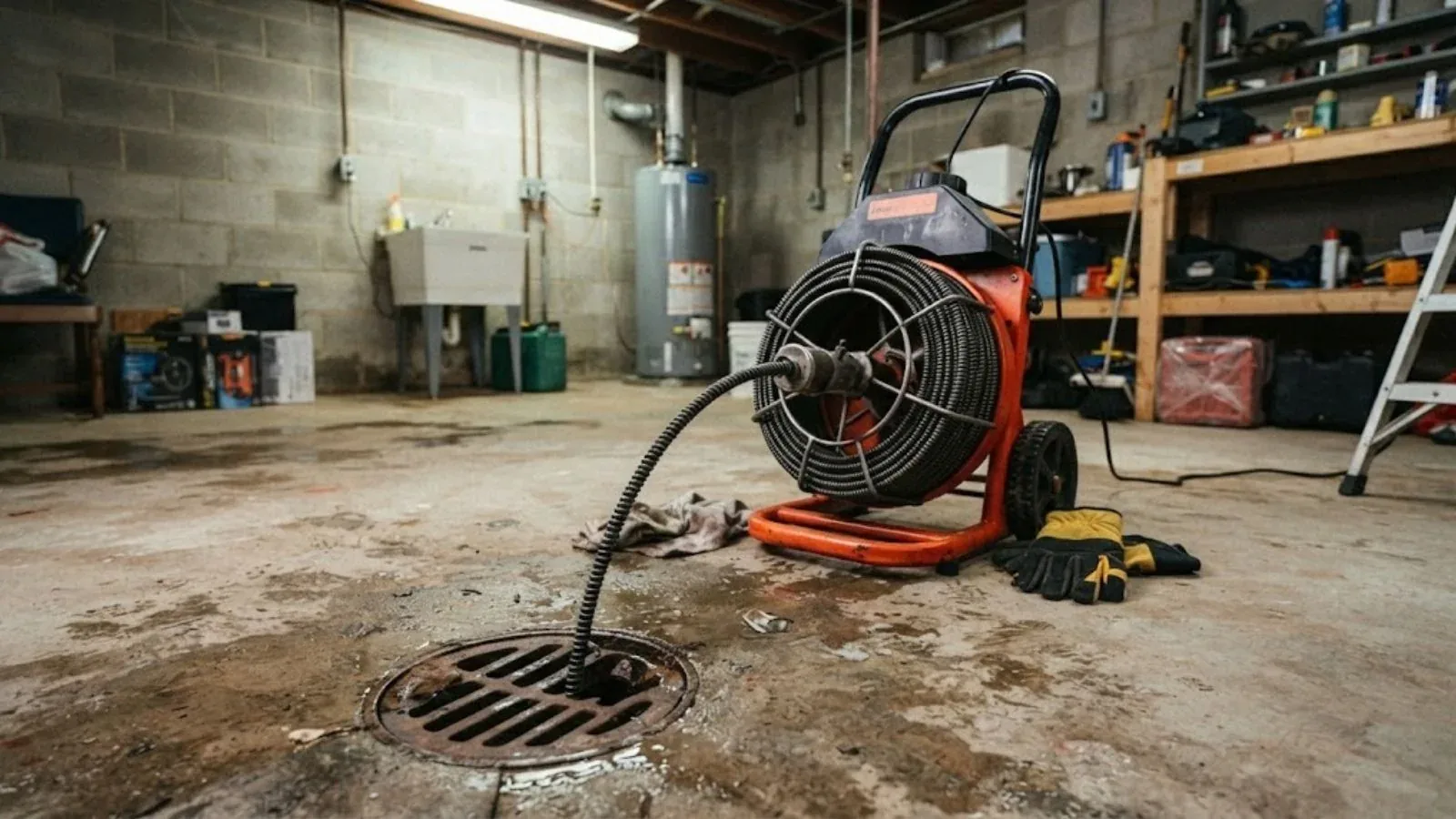
Drain backing up now? Do this while you wait
Water that rises instead of draining is telling you the blockage is real and close. Every extra flush or load of laundry sends more water to the same stuck spot. The next few minutes are about keeping the damage small until a plumber gets there. Call (630) 822-9290
While you wait for the plumber
- Stop using every sink, tub, toilet, dishwasher and washing machine in the house.
- Move rugs, boxes and electronics away from the affected drain.
- Keep children and pets out of any standing water, because it may carry sewage.
- Wear rubber gloves and boots if you must step into the area.
- Do not pour drain chemicals into a drain that is already full. They sit in the water and burn skin and eyes.
- If water is near outlets, a panel or appliances, stay out of the room and call 911 before you call us.
Sewage that comes up through a floor drain or tub is a health risk, not just a mess. Do not wade in barefoot and do not run a wet vacuum on it. Once we are on site we open the line, stop the backup and tell you what needs to be cleaned or dried.
What emergency drain cleaning looks like when we arrive
We start by asking which fixtures are slow, which are backed up and when it began. That short conversation usually tells us whether the clog is in one branch line or in the main. Then we find the nearest cleanout or access point and set up the right machine.
A cable machine handles most clogs. When the cable stops, we note how far it went, because that distance points to the blockage. We pull the clog out or break it up, run water to confirm the line flows, and check the neighboring fixtures. If the line clears but the cause is still unclear, we say so and explain the next step.
Active backups get priority dispatch, including same-day visits. After-hours calls are handled the same way as daytime ones. You get the price by phone before the work begins, and we explain it again on site if the job turns out different from what the symptoms suggested. (630) 822-9290 is the number for every hour.
One clogged fixture or a main line problem?
The pattern of symptoms matters more than any single slow drain. A single clogged sink points to a branch. Several fixtures acting up at once points to the main drain, which is the line that carries everything out of the house toward the sewer.
The Illinois Plumbing Code, 77 Ill. Adm. Code 890, is the standard for how traps and vents are installed. So when several fixtures gurgle together, the cause can be a venting fault or a main line problem and not a simple clog, which changes the tool we bring.
Signs that the problem is in the main line:
- A toilet gurgles when the washing machine drains.
- Water shows up in a basement floor drain or tub after you flush.
- A shower backs up when you run the kitchen sink.
- More than one drain is slow on the lowest level of the house.
- Water seeps from the base of walls or around a floor drain.
Main line backups are urgent because the water has nowhere to go but into your home. Basement fixtures and floor drains are the lowest outlets, so they overflow first. If you see any of these signs, treat it like an active emergency and call right away. Our sewer line cleaning page explains how we handle the long run from the house to the street.
Snaking and cabling: when a cable is the right tool
Snaking is the workhorse of drain cleaning. A motorized cable with a cutting head goes in through a cleanout, a fixture trap or a removed access cap. It bores through hair, soap scum, paper and many root intrusions, then pulls the debris back out.
A cable is a good choice for a first clog, a single branch line and a blockage that is close to the access point. It is quick, it reaches around bends, and it restores flow fast, which matters in an emergency. The limit is that a cable opens a hole through the clog without scrubbing the pipe wall. In greasy or scaled lines the opening can narrow again within weeks.
If your snake was not long enough or kept hitting something, tell us. That detail helps us choose a longer cable, a different head or a camera. A hand snake from a hardware store works on a pop-up sink stopper, but it rarely reaches a main line cleanout, and forcing it can scratch or crack older pipe. For the difference between a cable and a jet, see our hydro jetting page. Call (630) 822-9290
Kitchen sink clogs and slow drains
Kitchen drains clog differently from bathroom drains. Cooking grease cools inside the pipe and sticks to the wall, then food scraps and soap collect on it. Over months the opening shrinks until the sink drains slowly, then stops.
We clear a kitchen line by cabling the trap arm and the branch behind the wall, then flushing with hot water to move loosened grease. If the sink has a garbage disposal, we check that it is not the real blockage, since a jammed or clogged disposal can look just like a bad drain. A double bowl sink that backs up on the opposite side usually has a clog past the shared trap.
A few habits cut down repeat clogs. Wipe greasy pans with a paper towel before washing. Use a strainer. Run hot water for half a minute after the dishes. If the sink backs up again within a few weeks, the line needs more than another quick cabling, and we will tell you that plainly.
Shower and tub drains
Tub and shower clogs are mostly hair bound up with soap. The blockage often sits just below the drain strainer or in the trap, so it is a short job once we get to it. We remove the strainer or overflow plate, pull the clog and test the flow with the water running.
If a tub drains slowly while a nearby sink is fine, the clog is in the tub branch. If standing water shows up in the tub when you flush a toilet, the blockage is lower, in a shared drain or the main. We check which case it is before we choose a machine.
Cable, jet or camera: which one fits?
| Situation | Usual first step | Why |
|---|---|---|
| Single slow sink or tub | Cable through the trap or strainer | Quick, short run, low disruption |
| Several fixtures backed up | Cable the main line cleanout | Opens the line so water can leave |
| Grease buildup, repeat clogs | Hydro jetting after the cable | Scrubs the pipe wall clean |
| Clog keeps returning, cause unknown | Camera inspection | Shows breaks, roots or sags |
| Snake stops at the same spot | Camera, then repair plan | A stop usually means damage |
We pick the least disruptive method that will actually solve the problem. Sometimes that is a quick cabling. Sometimes it is a jet, and sometimes the honest answer is that the pipe is damaged and needs repair. (630) 822-9290 connects you with someone who can sort it out by phone before a truck rolls.
When a drain keeps clogging: pipe damage and leaks
Repeat clogs can come from a pipe that has cracked, sagged or shifted. A sagging section holds water and collects waste at the low point. A cracked or separated joint lets roots grow in, and the roots catch paper and grease.
We use a camera to see this directly instead of guessing. If it shows a bellied section or a break, a cleaning will only buy time. In that case we describe the damage and the repair choices, and our sewer line repair page explains how those repairs work. The sewer camera inspection page covers what the video shows and when it is worth doing.
A drain line can also leak without clogging. Signs include a damp ceiling below a bathroom, a musty smell, or a stain that grows after you use a fixture. A leak that shows up only when water runs usually belongs to the drain, not the supply. If you are not sure which, leak detection is the place to start.
Floor drains, sump pumps and your sanitary line
Hoffman Estates has separate rules for stormwater and household sewage. Under the Village code (Municode Sec. 11-3-2), a sump pump discharges storm water and an ejector pump handles sanitary sewage. Footing drains and drain tile may not be connected to the sanitary sewer, and basement floor drains go to ejector pumps that discharge to the sanitary side.
The practical meaning is simple. A basement floor drain that backs up is connected to the sanitary side of the house, so a clog in the main line shows up there first. A sump pit that fills during a storm is a different system. If the pit is overflowing and the floor drain is dry, the problem is stormwater, and our sump pump repair page is the better fit.
Drain calls across the village and next door
We take drain calls in all of Hoffman Estates, including ZIP codes 60169, 60192, 60179 and 60195. Households near the Schaumburg line often ask if we cover them too, and we do. Our Schaumburg service area page covers the ZIP codes we reach there.
The village's sanitary sewer mains are maintained by the Village, and the line from your house to the connection with the main belongs to the homeowner. That split matters when you call. A clog in your drain or service line is yours to clear, and a plumber can do that today. Call (630) 822-9290
What changes the price of drain cleaning
We give you the price by phone before work starts, and we explain any change on site before we go further. There is no surprise at the end. If the quote does not make sense for your situation, you can say no and we will end the visit with you.
If you want a plain answer to what your clog might cost, describe the symptoms when you call (630) 822-9290 and we will tell you which kind of job it looks like.
Yes. Our line is answered 24/7, and active backups get priority dispatch, including after-hours and same-day visits. Call (630) 822-9290 and tell us which fixtures are backing up.
Stop using water everywhere in the house, move belongings away from the backup, and keep children and pets out of any standing water. Do not pour chemical drain cleaner into a drain that is full.
If more than one fixture is slow, a toilet gurgles when other fixtures drain, or water appears in a basement floor drain, the main line is the likely cause. A single slow sink usually points to a branch.
We advise against them, especially in a full drain. They can damage older pipes, and they leave a hazardous liquid in the water we have to work in afterward.
Not always. A cable opens a channel but does not scrub the wall, so grease and scale can close it again. Repeat clogs often need hydro jetting or a camera to find damage.
Yes. That pattern usually means the clog is past the shared trap, so we cable the branch behind the wall and check the disposal as well.
Yes. A landlord or manager can call on behalf of a tenant. Tell us who can give access to the unit and who approves the work.
In Hoffman Estates, the Village maintains the sanitary sewer mains. The homeowner is responsible for the service line from the house up to and including the connection to the main.