
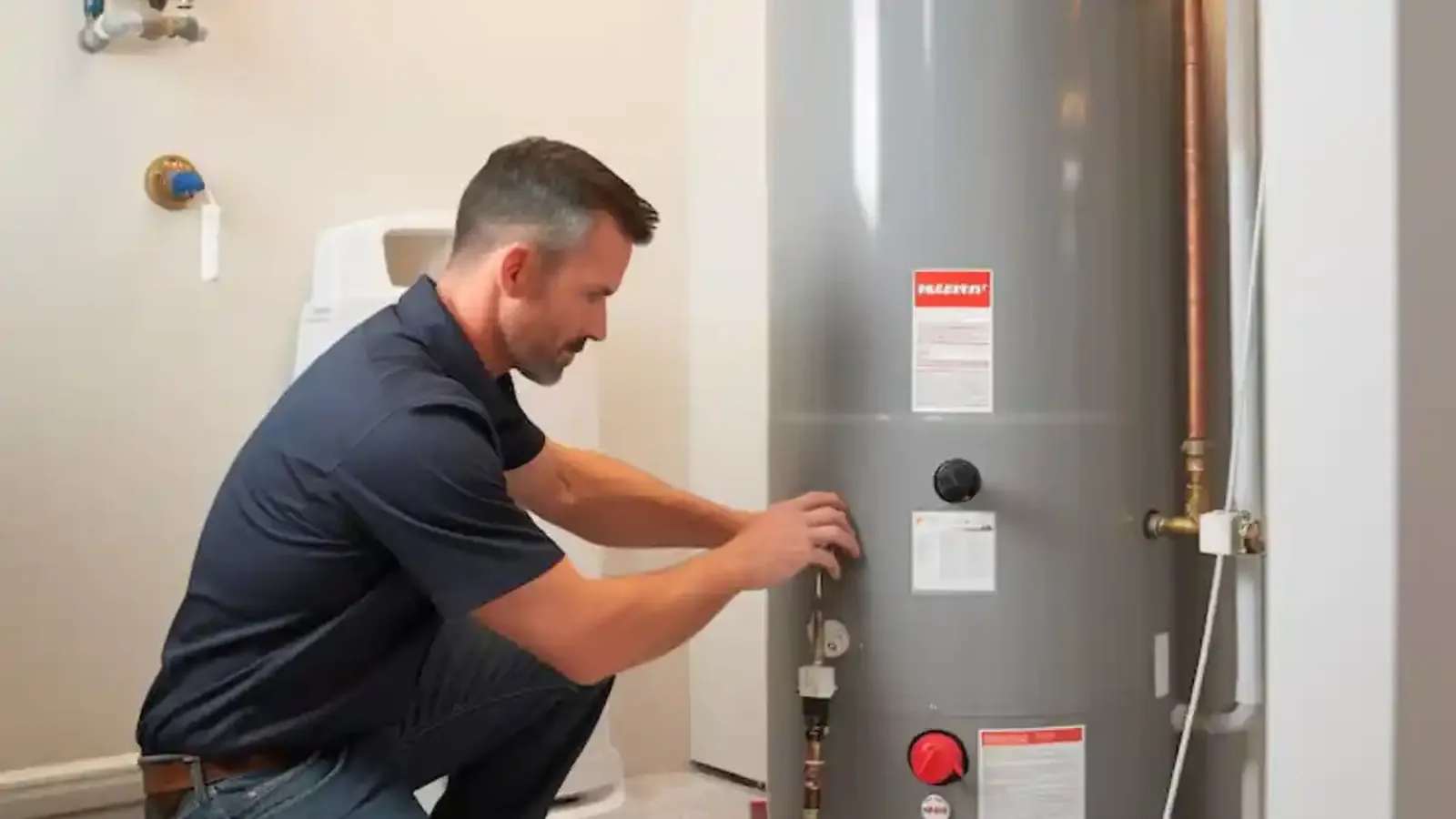
Start with the room, not the model
The place where the heater sits decides more than most people expect. A gas unit needs venting that works, enough air for combustion and a clear path for the relief pipe. An electric unit needs the right circuit and a floor drain or a pan nearby. A heat pump model needs open space around it.
Walk us through your basement, closet or garage when you call. Tell us where the old unit is, what it runs on and whether anything has been added around it since. Those answers shape the whole job. Call (630) 822-9290
Choosing fuel and type
Most installs keep the same fuel, because the gas line, vent or circuit is already there. Changing fuel is possible but adds work. Going from electric to gas needs a gas line and a vent. Going from gas to a hybrid heat pump unit needs a circuit, space and a condensate drain.
| Type | What the install needs | Watch for |
|---|---|---|
| Atmospheric gas tank | Flue to the outside, air supply, gas shutoff | Draft problems and old flue pipe |
| Power-vented or condensing gas | Power outlet, vent run, condensate drain | Longer vent runs and drain location |
| Electric tank | Dedicated circuit and breaker | Panel capacity and wire condition |
| Hybrid heat pump | Circuit, airflow, condensate drain | Room size and noise |
| Tankless | Gas or electric load, vent, isolation valves | See tankless water heater |
If you are replacing a unit that has already failed, that is a faster path. Our water heater replacement page covers what to do when the tank is leaking now.
Picking a size
Tank capacity should match how your household uses hot water. The number of people, bathrooms and big users such as a soaking tub or a laundry room matter more than square footage. A tank that is too small runs cold during busy mornings. One that is too big wastes energy keeping extra water hot.
We also look at recovery, which is how quickly the unit reheats once you have used the hot water. For some homes, a higher recovery unit works better than a bigger tank. We will work through it with you using your actual routine.
Venting and gas work
Venting is the part of a gas install that cannot be improvised. Exhaust gases, including carbon monoxide, have to leave the house through a sound vent with the right slope and secure joints. A vent that was fine for the old heater may not suit a new one with a different design.
Gas piping, shutoffs and connectors are handled by a licensed plumber and not by the homeowner. If you ever smell gas during or after any work, leave the building, call the Nicor Gas emergency line or 911 from outside, and then call us. Call (630) 822-9290
If the old vent needs to move, that is a bigger job, and we will price it separately on the phone. A heater in a closet also needs enough air through openings at the top and bottom of the door or wall.
According to the Village handout, joints in a gas flue must be screwed and the draft diverter secured. A vent that looks fine but misses that standard will not pass the final inspection, and the heater should not be treated as finished until it does.
Code and permits in Hoffman Estates
The Village of Hoffman Estates requires a permit for water heater work. The Village's handout for new, repair and replacement water heaters lists what the inspector checks, and the Village fee handout lists $50 for a water heater permit. A final inspection is required, and the Village does not schedule same-day inspections.
The conditions include a cold supply shut-off valve within 5 feet of the heater in the same room, dielectric unions where dissimilar metals meet, and listed flexible connectors. The relief valve needs a full-size metal discharge pipe that ends 2 to 6 inches above the floor, and plastic pipe is not allowed there. (630) 822-9290
For gas heaters, flue joints must be screwed, the draft diverter must be secured, and the contractor certifies the flue. Closets need combustion air openings of 100 square inches at the top and the bottom. A gas heater in a garage must have its burners 18 inches off the floor. Manufacturer clearances apply too.
We plan the install around those conditions so the final inspection goes smoothly. Illinois licenses plumbers through the Illinois Department of Public Health, and the Village adopts the Illinois Plumbing Code. You can verify any plumber's license through IDPH.
Installing for efficiency, and Nicor rebates
Nicor Gas customers may qualify for a rebate. For 2026, Nicor's program lists $150 for a qualifying tankless water heater and $150 for a power-vented or condensing storage heater. The unit must be installed between January 1 and December 31, 2026. You apply within 90 days of installation or by January 31, 2027.
Eligibility rules depend on the unit's efficiency rating. Check Nicor's rebate page or call 877-886-4239 before you buy so the model you choose qualifies. We can help you read the specification label. Call (630) 822-9290
If you want a hybrid heat pump unit, ask your electric utility directly about any rebate, since amounts and rules change.
The day of the install
On the day, we shut off the water and power or gas, drain and disconnect the old heater and remove it. The new unit is set level, with a drain pan where required, a new relief valve and a proper discharge pipe. We connect the water lines with shut-off valves and flexible connectors that meet the Village conditions.
Gas units are leak-tested and the vent is checked for proper draft. Electric units are checked for correct wiring before power is restored. We run hot water, check every joint and show you where the shutoffs and the relief valve are. Our 24/7 line stays open if anything seems off later.
Some homes benefit from an expansion tank or a thermal expansion fix. If your plumbing has a closed system, we explain it and quote it before adding it. If you ever run into water in an unexpected place after the install, leak detection can help find where it is coming from.
What changes the price
We give you the price by phone before work starts, once we know the fuel, size and location. If something on site changes the scope, we explain it first and wait for your approval. (630) 822-9290
Water heater installation questions
A like-for-like swap is often done in one visit. Changing fuel, moving a vent or fixing old piping can add time, and we tell you before we start.
Yes. The Village has a water heater permit with a final inspection, and its fee handout lists $50. We will go over the steps when you call.
It depends on your household size, number of bathrooms and peak use. Describe your routine and we will recommend a capacity.
Often yes, but it changes the venting, piping and sometimes the electrical work. We will go over the cost before moving it.
Yes, though it changes gas, venting and sometimes electrical needs. See our tankless water heater page for what is involved.
For 2026, Nicor lists $150 for qualifying tankless and power-vented or condensing storage units. Check Nicor's current requirements before buying.
Shut off the water to it and call us. Our emergency repair page has the steps to take while you wait.
Illinois licenses plumbers through IDPH, and the Village requires a permit for the work. Use a licensed and insured plumber, and verify the license if you want.
When you are ready to plan, Call (630) 822-9290 or reach us at (630) 822-9290. We can talk through the room, the fuel and the permit steps in one conversation.