What a hydro jet does that a cable cannot
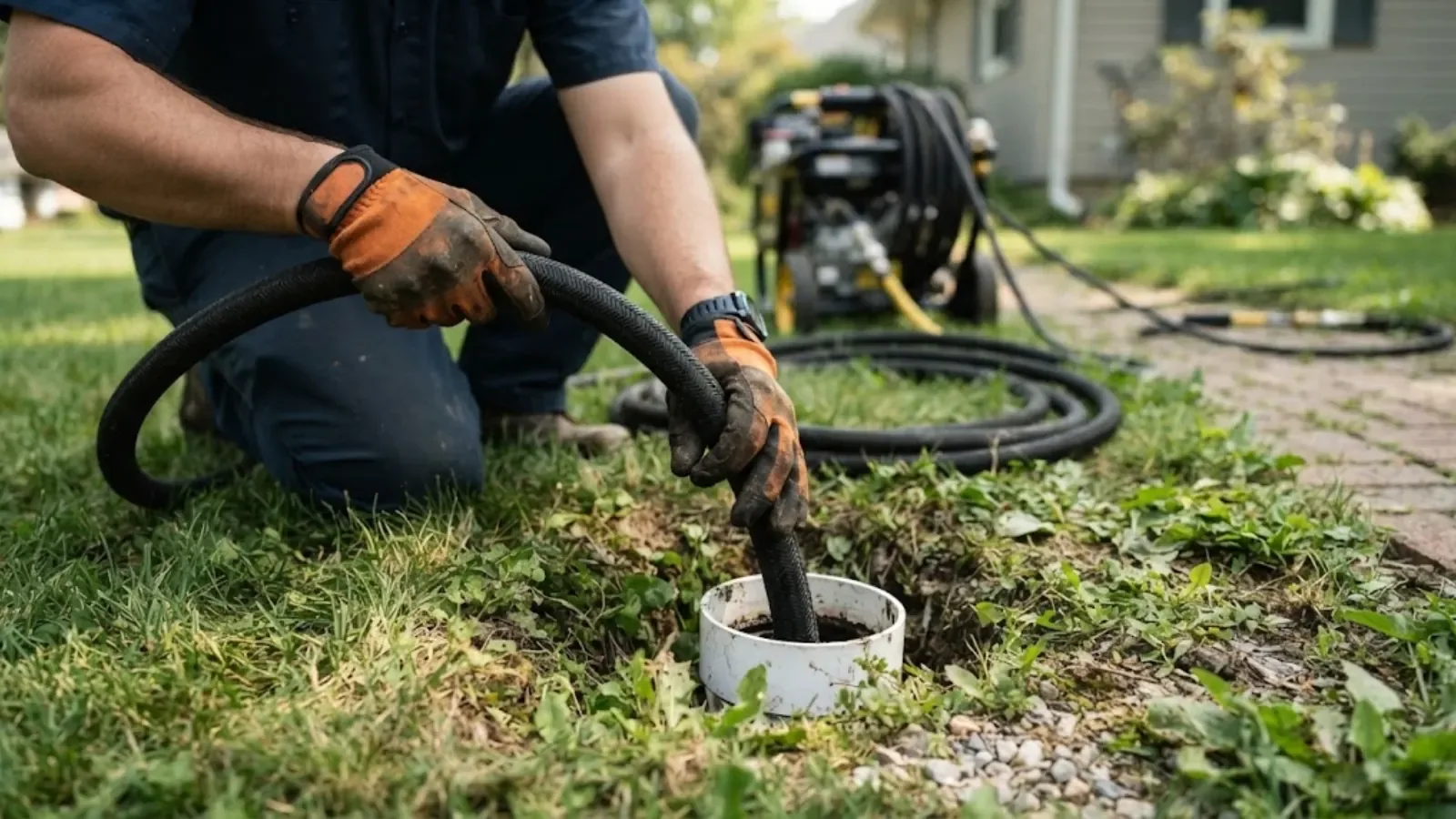
A cable punches a hole through a clog. A hydro jet does something different. It sends a hose with a special nozzle down the pipe, and pressurized water streams out of the nozzle in several directions. The water cuts the blockage apart and scrubs the inside of the pipe as the hose is pulled back.
That scrubbing is the point. Grease, soap scale and fine silt cling to the wall and shrink the pipe's working diameter. A cable passes through the middle and leaves most of that coating behind. A jet removes the coating, so the line drains like a clean pipe again, and the clog is less likely to return in a few weeks.
Jetting also washes debris down and out of the line instead of dragging it back toward you. That makes it a good fit for long runs and main lines, where pulling a cable back full of waste is slow and messy. Call (630) 822-9290
Grease, scale, roots and sludge: what jetting clears
Different blockages respond to different nozzles. We pick the nozzle after we know what is in the pipe.
Grease. Kitchen waste is the most common reason people ask for a jet. Fat cools on the pipe wall and builds in layers. A jet strips those layers where a cable would only bore through them.
Scale and mineral buildup. Older drain lines can narrow gradually from scale. Jetting removes loose scale and restores much of the opening. It does not repair a pipe that is cracked or collapsed.
Roots. Fine roots that enter at a joint can be cut and flushed out. A thick root mass sometimes needs a cutting head first, then a jet to clean up. Roots that return mean the joint is open, and we will explain what that means for repair.
Sludge and silt. A sagging section collects waste. Jetting moves it out, though the sag itself remains until the pipe is repaired.
When a main line is backed up: what to do before the jetter arrives
A backed-up main line is the case that cannot wait. If water is rising in a tub, a toilet or a basement floor drain, treat it as an emergency and call.
Until we get there
- Turn off the water-using habits in the house: no flushing, no showers, no laundry.
- Shut off the dishwasher and washing machine if they are running.
- Keep everyone out of the affected area, especially children and pets.
- Do not use a plunger on a floor drain that is already overflowing.
- Do not run any chemical cleaner. It makes the water we have to work in unsafe.
- If water is near outlets or the electrical panel, leave that area and call 911 first.
Sewage-contaminated water is a health risk. Wear gloves, avoid skin contact and wash your hands well afterward. The cleanup of soaked materials is a separate job from the plumbing, and we will point out what needs attention. For the broader emergency steps, see our drain cleaning page. (630) 822-9290
How an emergency hydro jetting call goes
On the phone we ask which fixtures are backed up and whether anything changed recently, such as a clog that was cabled before. That tells us if jetting is likely to help. Backups get priority dispatch, and same-day visits are normal for active emergencies. The line is answered 24/7, nights and weekends included.
On site, we locate a cleanout or open an access point. We often start with a cable or a camera to learn what we are dealing with, then switch to the jetter. The nozzle goes in, water goes on, and we work the line forward and then back. When the water runs freely, we flush and test the fixtures.
You hear the price before work starts, and we explain any change before we continue. You see the result in the water: floor drains stop gurgling and toilets flush without a surge.
Camera first, then the jet
A jet is powerful, but it should not be blind. A camera shows whether the pipe is clean walled, coated, rooted or broken. That matters because jetting a damaged pipe can wash soil into a crack or make a weak section worse.
When we are unsure of the pipe's condition, we look before we jet. The video also gives you a record of what is in the line, which helps if the clog returns. Our sewer camera inspection page explains what you see and how long it takes. If the video shows damage, the next question is repair, and the sewer line repair page walks through the options.
| Condition in the pipe | Is jetting a good fit? | What else to expect |
|---|---|---|
| Heavy grease on the wall | Yes | A follow-up habit change helps |
| Mineral scale or sludge | Yes | May need a second pass |
| Fine roots at a joint | Yes, often with a cutter | Roots may return if the joint is open |
| Thick root mass | Sometimes | Cutting head first |
| Cracked or collapsed pipe | No | Repair needed |
| Sagging section holding water | Temporary | Repair or replacement later |
When jetting is the wrong call
Jetting is not for every pipe. If the line is broken, offset or collapsed, water pressure will not fix it. Older fragile pipe may not tolerate the force. A cleanout that is missing or too small can make safe access difficult.
We would rather tell you that than run a jetter for show. If the camera shows a failed pipe, we cable open what we can, explain the damage and give you the repair options. If the blockage is a simple single sink clog, a cable is cheaper and quicker. Hydro jetting earns its place on greasy lines, repeat blockages and long main runs.
According to the Village's sewer rules in Municode Chapter 12, a sewer connected to the Village main must carry sanitary sewage only and exclude ground water and storm water. If the camera shows clear water entering through a cracked joint, that is a repair issue to fix and not a clog the jet can clear.
Repeat clogs, kitchen lines and main lines
Jetting is a smart answer to a clog that comes back every few months. A kitchen drain that you have cabled three times probably has a greasy coating on the wall. A main line that backs up each spring may carry scale or fine roots. A single jet pass cleans a long length at once, which saves repeated calls.
Jetting is also available for homes just across the line in Schaumburg. After jetting, a few habits help the line stay open. Keep grease out of the sink, collect it in a can and throw it in the trash. Do not flush wipes, even those labeled flushable. A toilet repair visit can sort out a toilet that clogs even with a clean line, since the problem may be the fixture and not the pipe. Call (630) 822-9290
Where your pipe ends and the Village's begins
The Village of Hoffman Estates Sanitary Sewer Division maintains 187 miles of sewer mains, more than 5,200 manholes and 16 lift stations. The homeowner is responsible for the sewer service line from the house up to and including the connection to the Village main.
This matters for jetting because we clear the part you own. If a camera shows the blockage past that connection, in the Village main itself, the right call is to Village Public Works and not a private plumber. We tell you what we see so you know which side of that line the problem sits on.
What changes the price of hydro jetting
We give you the price by phone before any work begins. If the camera shows something that changes the plan, we stop and explain it before we continue. You decide at each step. (630) 822-9290
Yes. Our line is open 24/7 and active backups get priority dispatch, including night, weekend and same-day visits. Call (630) 822-9290 and describe which drains are backing up.
Stop using water, keep people and pets out of any standing water, and do not use chemical cleaners. If water is near electrical outlets, stay away and call 911 first.
It depends on the pipe. We look at the line with a camera when we have doubts, because a cracked or fragile pipe can be damaged by high-pressure water.
For grease, scale and repeat clogs, yes, because it cleans the pipe wall. For a simple hair clog in a single sink, a cable is usually the better choice.
It can remove fine roots and wash them out. Thick roots may need a cutting head first, and roots that keep returning mean a joint is open and needs repair.
Sometimes. A greasy or coated pipe can hold odor, and cleaning it helps. A smell can also come from a dry trap or a vent problem, so we check those as well.