
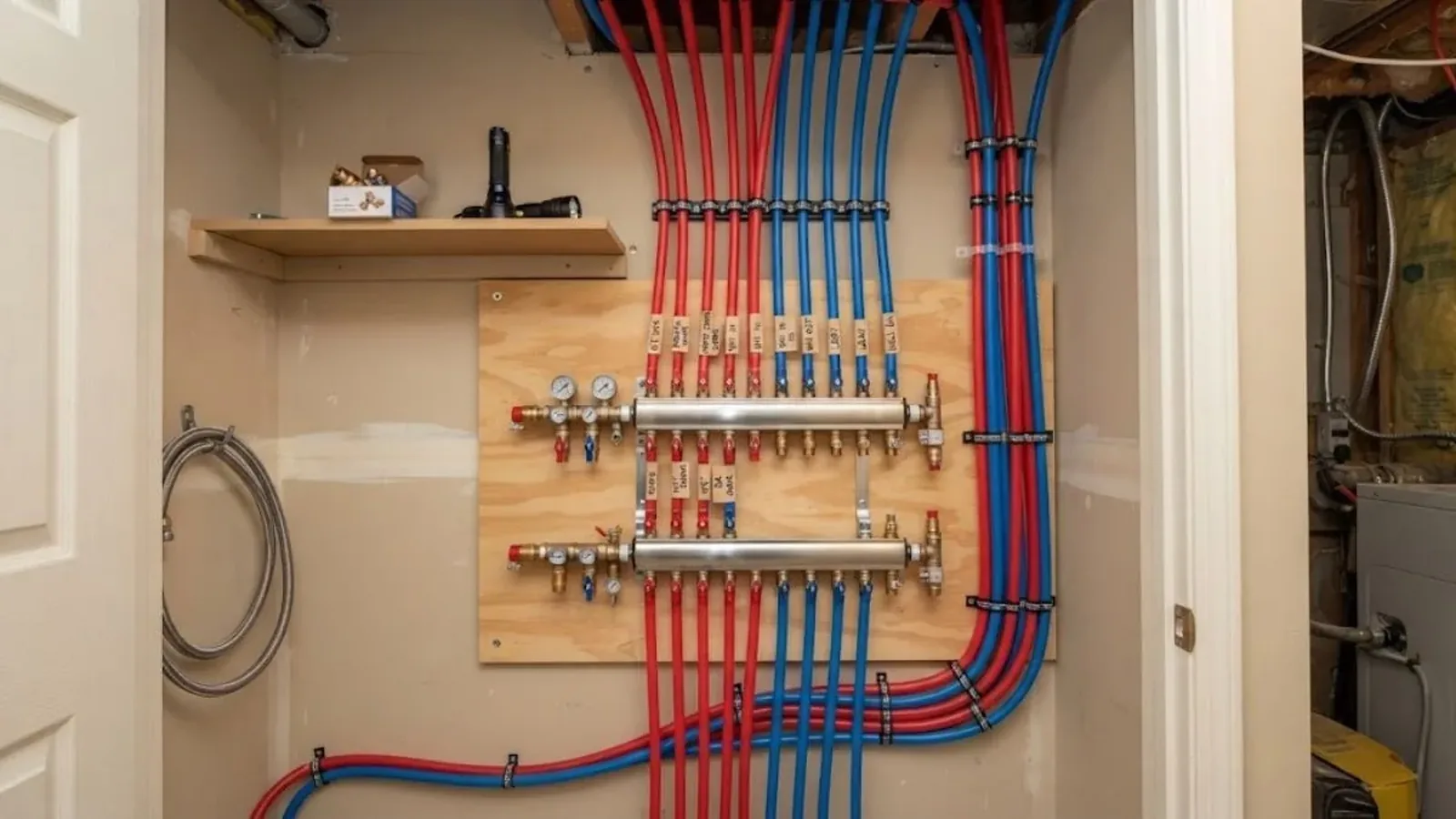
Is it time to repipe or repair?
One failed pipe does not mean the whole house needs new plumbing. A single leak in sound pipe can usually be repaired. Repiping becomes worth the cost when the pipe itself is the problem.
Consider it when leaks keep appearing in different places, when the water runs brown or rusty, or when pressure has slowly faded across the house. A plumber looks at what is behind the walls, tests the pressure and tells you honestly whether repairs are enough. The line also answers 24/7 if a pipe fails before the project starts.
Galvanized steel pipes and why they fail
Galvanized steel was a common supply material in older homes, and it corrodes from the inside. Rust builds up on the pipe walls, and the opening narrows. The result is low pressure, rusty water at the tap and leaks at the threaded joints.
Repair is a temporary fix, because the next section of pipe is usually in the same condition. Replacing galvanized lines is one of the most common repiping jobs. A plumber can often tell the material by the dull gray color and the threaded fittings.
Copper pipes: pinholes, pitting and repairs
Copper lasts for decades, but it does not last forever. Pinhole leaks, green corrosion at the joints and repeated repairs suggest that the metal is wearing out. Cold water chemistry and high flow speeds can both play a part.
A few isolated repairs on healthy copper are normal. Several in a short time are not. If you have had copper repaired more than once recently, ask the plumber to look at the whole run. A burst from a freeze is a separate issue, covered under burst pipe repair.
CPVC, PEX and what replaces old pipe
New supply lines are usually copper, PEX or CPVC. Each has trade-offs in cost, durability and installation. The plumber explains which fits your house and why.
| Material | Strengths | Trade-offs |
|---|---|---|
| Copper (Type L or K) | Long record, works in many spaces | Higher material cost, more labor to solder |
| PEX | Flexible, fewer joints in long runs | Not for sunlight, needs proper fittings |
| CPVC | Resists corrosion, lower cost | More rigid, can turn brittle with age |
The right choice also depends on local code. The Village has adopted the Illinois Plumbing Code, 77 Ill. Adm. Code 890, and your plumber works within it. Ask which material is planned for your job and why, or call (630) 822-9290 for a plain answer.
Low water pressure and discolored water
Low pressure is one of the main reasons people consider repiping. If it affects only one faucet, the fix is usually local. If it affects the whole house, the supply lines may be restricted by corrosion or scale.
Check whether the pressure drop started suddenly or built up over years. A sudden drop may be a leak, a failing valve or a service line problem, which our water service line repair page explains. A slow decline points to pipe age. The Village's water report lists no lead service lines, but the pipes inside your home are your own and a plumber can identify them.
What repiping involves
Repiping is planned work. The plumber maps the new routes, protects your floors and furnishings, and opens walls only where needed. Water is off for part of the job, so ask about the plan for bathrooms and kitchen use.
Access matters. Pipes in an open basement or crawlspace take less work than pipes behind finished walls. Some homeowners repipe in stages by floor, while others do the whole house in one project. We will talk through the sequence by phone before work begins, so (630) 822-9290 with questions.
Permits, inspections and noise rules in Hoffman Estates
Plumbing work in the Village needs a permit. The Village does not publish a separate repipe handout, so repiping is handled through its permit rules for plumbing alterations. Its fee schedule lists a plumbing permit at $75 plus $10 per fixture, and the handout notes it is not all-inclusive.
The Village's remodel handout asks for a complete written scope, a rough plumbing inspection and a final inspection. Construction hours near homes are 7 a.m. to 7 p.m. on weekdays and 8 a.m. to 6 p.m. on weekends. Your plumber plans the schedule around those windows and pulls the permit.
Under Municode Section 12-3-12, plumbing on the Village public water supply must follow the Illinois Plumbing Code, 77 Ill. Adm. Code 890. That is the standard your new pipe, fittings and connections are inspected against, so the pipe material is chosen with that code in mind.
Repiping and drywall repair
Opening walls is part of most repipes. Patching drywall, painting and replacing trim are not plumbing work, so plan for them separately. Many homeowners combine a repipe with a bathroom or kitchen remodel so walls are opened once.
If you are already planning new fixtures, see our plumbing installation page. Doing both together can reduce disruption.
What affects repiping cost
What changes the price
The plumber gives you a price by phone before the job begins and explains each item. If the scope changes after walls are opened, you hear about it before any extra work is done. Call (630) 822-9290 to describe your house and start the quote.
Repiping questions
Repeated leaks in different spots, rusty water and a steady loss of pressure are the usual signs. A plumber inspects the pipes and tests pressure to confirm.
Yes. Some homes are done in sections, such as one floor or one bathroom group. The plumber explains what a partial job leaves behind.
Galvanized pipe is not a lead pipe, but it rusts inside and restricts flow. The Village reports no lead service lines, though your interior plumbing is separate.
Yes, plumbing work needs a permit in Hoffman Estates. The fee is based on the number of fixtures, and your licensed plumber handles it.
Yes, for part of the work. The plumber plans around your bathrooms and kitchen and tells you in advance.
Not always. A single leak in sound pipe is a repair job. If leaks keep returning, repiping may cost less over time. Leak detection can show where the damage is.
Yes. The line is open 24/7 for leaks and bursts, and a licensed plumber is sent as soon as one is free.