
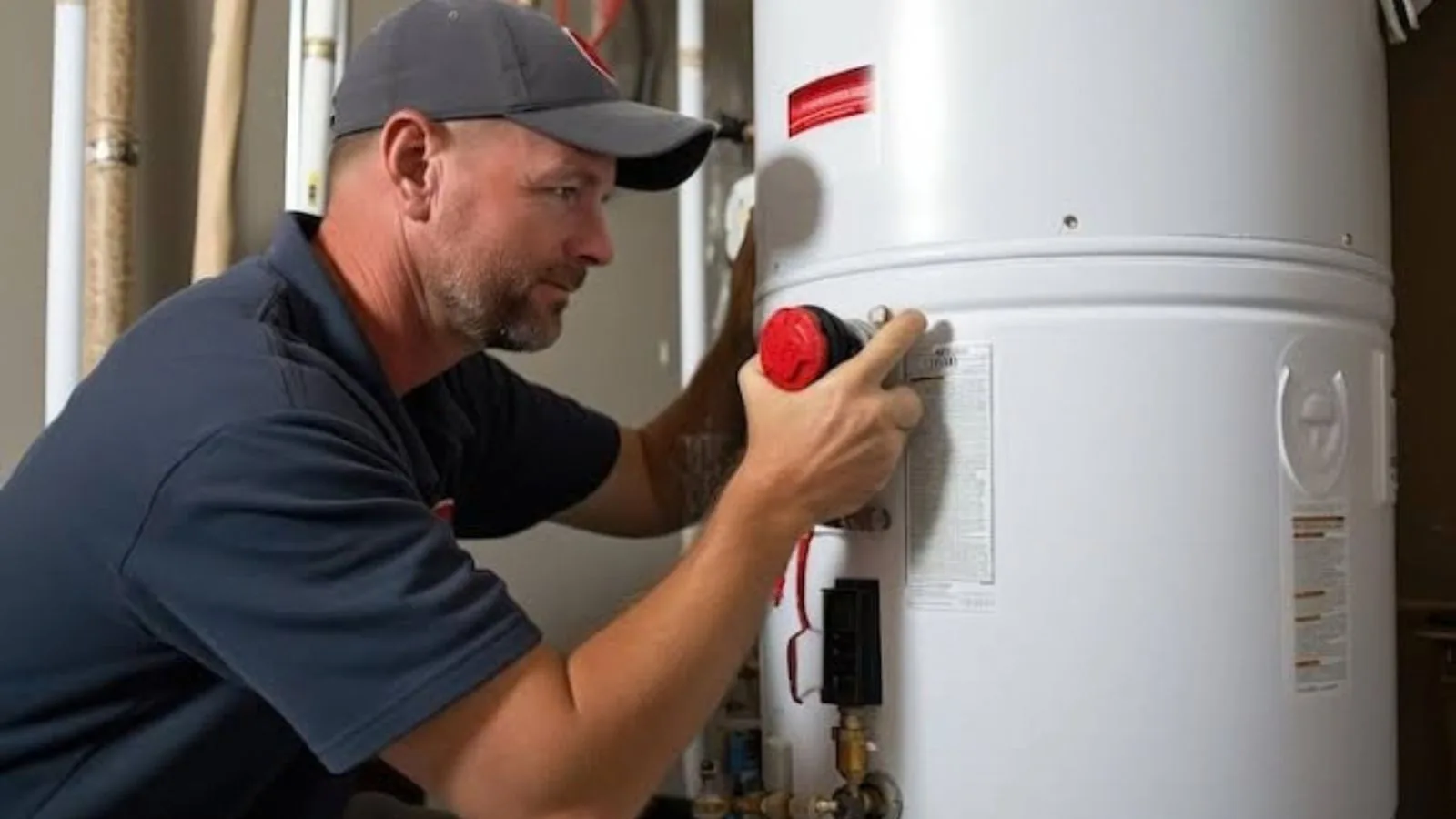
What to do right now
Water heater trouble gets worse the longer it runs. A small drip can turn into a flooded basement, and a gas unit that acts up can become a safety problem. These steps take a few minutes and protect your home until a plumber arrives. Call (630) 822-9290
If your water heater is leaking
- Turn the cold water supply valve on top of the tank clockwise to stop new water from entering.
- For an electric unit, switch off its breaker. Do not touch the tank or the floor if water is standing near an outlet or panel.
- For a gas unit, set the gas control to off or pilot only if you can reach it dry and safely.
- Move boxes, rugs and stored items away from the water.
- Take photos of the leak and the label on the tank so we can plan the right parts.
Smell gas? Leave first
If you smell gas (a rotten egg odor), do not touch switches, lighters or your phone inside. Leave the building with everyone in it. Call the Nicor Gas emergency line or 911 from outside. Once the gas company says the home is safe, call us at (630) 822-9290.
Water heater leaks: where the water is coming from
A leaking water heater is the most common reason people call us, and the source of the leak decides everything. Water around the base can come from the tank itself, from a fitting on top, or from the relief valve. Only some of those can be repaired.
A leak from a fitting, a drain valve or a supply connection is often a repair. A leak from the pressure relief valve discharge pipe can mean a worn valve or too much pressure in the plumbing. Water pooling under the tank with no visible fitting is usually a different story, because it points to a rusted-through tank.
The Village handout sets the standard for the relief valve discharge pipe as full-size metal, ending 2 to 6 inches above the floor, with plastic prohibited. If a repair visit turns up a plastic discharge pipe, that is something we correct.
When the steel tank itself has failed, no patch or sealant will hold. We will tell you that plainly and explain your options on the spot, including water heater replacement when it is the safer path. If the leak is not from the heater at all, we can track the real source through leak detection. Call (630) 822-9290
No hot water, or not enough of it
When the shower runs cold, the cause depends on whether your heater uses gas or electricity. Electric units usually fail at a heating element, a thermostat or a tripped high-limit switch. Gas units fail at the pilot, the thermocouple, the gas control valve or the burner.
Not heating at all and heating slowly are different problems. Running out fast often points to a broken dip tube or one failed element in a two-element tank. Lukewarm water can come from sediment buried at the bottom of the tank, which shields the burner or elements from the water.
Before you call, check the breaker or the pilot light only if you can do it safely. Tell us what you see and hear. Those details let us bring the right parts the first time. (630) 822-9290 is staffed around the clock.
Gas water heaters: pilot lights, venting and safety
Pilot light problems are among the most frequent gas water heater calls. A pilot that will not stay lit usually means a worn thermocouple, a dirty pilot tube or a gas control that is wearing out. Relighting it again and again is not a fix.
Venting matters just as much as the flame. The flue carries exhaust, including carbon monoxide, out of the house. Soot, rust flakes around the draft hood or a flame that rolls out of the burner area are warning signs. Treat them as a safety problem, not a comfort problem.
If a carbon monoxide alarm sounds, get everyone outside and call 911. Do not go back in to look at the heater. After the all-clear, we can inspect the flue and burner so the problem does not return. We never ask you to work on gas lines yourself. Call (630) 822-9290
Electric water heaters: elements, thermostats and tripped breakers
Electric tanks look simple, but the wiring runs at household voltage and the tank is full of water. That combination is why we tell homeowners to leave covers and panels alone. A breaker that trips again right after you reset it means something is shorted or failing.
Most electric repairs come down to a bad upper or lower element, a faulty thermostat or a burnt wire connection. We test each part before replacing anything, so you pay for the part that actually failed. If the tank is old and corroded inside, we will say so before you spend money on a part that will not outlast it.
Noise, smell and discolored water
Rumbling, popping or knocking from the tank is usually sediment. Minerals settle at the bottom, trap small pockets of water and boil it into steam bubbles. Over time, that layer works the heater harder, wastes energy and shortens the tank's life.
A flush can clear light buildup, and a worn anode rod can be replaced to slow rust inside the tank. A rotten egg smell from hot water only often relates to the anode rod reacting with bacteria in the tank. Brown or rusty hot water can mean the tank is corroding from the inside.
Hoffman Estates water comes from Lake Michigan, bought from the City of Chicago, and the Village's water quality report does not print a hardness figure. So we do not guess how fast scale builds in your tank. We look at what comes out when we drain it. If you want to talk about treating the water itself, see our water softener and filtration page.
Repair or replace? A quick comparison
Age is the first question we ask, followed by the condition of the tank. A newer tank with one failed part is usually worth repairing. An older tank that is leaking from the shell is not. Many homeowners are surprised how many years a tank can last when it is maintained, and how fast an old one can fail.
| Problem | Common cause | Usually |
|---|---|---|
| Water at the base | Failed tank or loose fitting | Replace if tank, repair if fitting |
| Cold water only | Element, thermostat or pilot | Repair |
| Pilot keeps going out | Thermocouple or gas control | Repair |
| Dripping relief valve | Worn valve or high pressure | Repair |
| Rust-colored hot water | Corroding tank interior | Usually replace |
| Rumbling noise | Sediment buildup | Flush or repair |
If your heater is 15 years old or more and starts leaking, the repair-versus-replace decision usually comes out the same way. The shell has corroded, and the next failure is near. We will give you both numbers on the phone so you can choose.
Emergency repairs at night, on weekends and holidays
Water heaters have a talent for failing on a Sunday night or in the middle of January. Our line answers around the clock, and we dispatch for active leaks and gas-related problems first. If the situation allows, we may be able to come the same day, and we will tell you honestly what to expect.
While you wait, keep the water off to the heater, keep people away from wet areas near electrical equipment and stay out of the basement if the floor is flooded. If the leak is spreading, shutting off the main water valve gives you the most control. We can talk you through finding it. Call (630) 822-9290
Before We Arrive
What changes the price
We give you the price by phone before work starts, after you tell us the symptoms and the model. If the plumber finds something different on site, we explain it and get your approval before moving ahead. You are never asked to commit to work you have not heard about. (630) 822-9290
Permits and water heater work in Hoffman Estates
The Village of Hoffman Estates publishes a handout titled "Water Heater - New, Repair & Replacement," which lists the conditions the Village looks for. They include a shut-off valve on the cold supply within 5 feet of the heater, a relief valve with a full-size metal discharge pipe, and proper flue joints on gas units.
The Village's fee handout lists $50 for a water heater permit, and the Village asks that emergency repair work be permitted within 24 hours after work begins. In practice, that means a repair that touches the gas, flue or relief piping should be done by a licensed and insured plumber who knows these requirements.
Water heater repair questions
Yes. Our line answers 24/7, including nights, weekends and holidays. Call and we will give you shutoff steps right away while we line up a plumber.
Shut the cold water supply to the heater and turn off its power. If it is gas and you smell gas, leave the house and call the Nicor Gas emergency line or 911 first.
Sometimes. A loose fitting or drain valve can be repaired, but water leaking from the tank shell means the tank has failed. See water heater replacement for next steps.
On electric units, it is often an element, a thermostat or a tripped breaker. On gas units, it is often the pilot, the thermocouple or the gas control. We can narrow it down by phone.
It depends on the failed part and the tank's condition. A 15-year-old tank with a corroded shell is rarely worth repairing, while a newer tank with a bad part usually is.
Yes, including descaling and error codes. See our tankless water heater page for details on that type of service.
We can look at hybrid units, including checking for leaks and plumbing issues. Call us with the make and model so we can tell you what we can handle.
The Village has a water heater handout covering new, repair and replacement work. Ask us on the call whether your specific repair needs one.
If your heater is giving you trouble right now, Call (630) 822-9290 or dial (630) 822-9290. If a repair is not the right answer, we also handle water heater installation when you are ready to plan a new unit.