
Leak emergency: what to do while you wait
If water is coming through a ceiling or pooling on a floor, act before you do anything else. The goal is to stop the damage from growing until a plumber can trace the source. These steps are safe for any homeowner.
Do this first
- Turn the main water shutoff clockwise until it stops. In most homes it sits near the meter or where the line enters the basement.
- Stay out of standing water if it reaches outlets, appliances or the electrical panel, and call 911 if you feel unsafe.
- Switch off the water heater breaker or gas control if the leak is near the tank, so the heating element is never left dry.
- Move rugs, furniture and valuables out of the wet area, then take photos of the damage for your insurer.
- Open a cabinet or closet near the wet spot and look for a drip, but do not cut into walls yourself.
When you reach us, describe where the water shows up and whether the meter is still moving. That tells the plumber which tools to bring. A same-day visit is common, though availability depends on the hour and the call volume.
Signs of a hidden water leak
Most leaks do not announce themselves with a puddle. They show up as small changes that are easy to dismiss for weeks. Watch for these clues around the house.
Common clues
- A water bill that jumps with no change in how many people live in the home.
- A wet spot, brown stain or bubbling paint on a ceiling or wall.
- A warm patch on a floor, or a floor that feels soft underfoot.
- The sound of running water when every fixture is off.
- A musty smell in a closet, basement or crawlspace.
- Water pressure that has dropped on its own.
None of these proves a leak by itself. A stain can come from condensation or a roof problem, and a high bill can come from an irrigation system or a running toilet. A short inspection sorts out which one you have.
High water bill or spinning meter: confirm the leak yourself
The water meter is the quickest way to learn whether a leak exists. Turn off every faucet, the ice maker and the washing machine. Then look at the small dial or low-flow indicator on the meter.
If it keeps moving with everything off, water is escaping somewhere between the meter and your fixtures. If it stops, the leak is probably inside a fixture that only runs when used. Write down the reading, wait an hour without using water, and read it again.
The Village of Hoffman Estates runs more than 15,000 meters, and its water billing office can answer questions about a reading at 847-843-4824. Call them if the meter looks wrong or the bill does not match what you used. Then call (630) 822-9290 if the reading proves water is leaking. The line stays open around the clock.
How a plumber finds a leak without tearing up the house
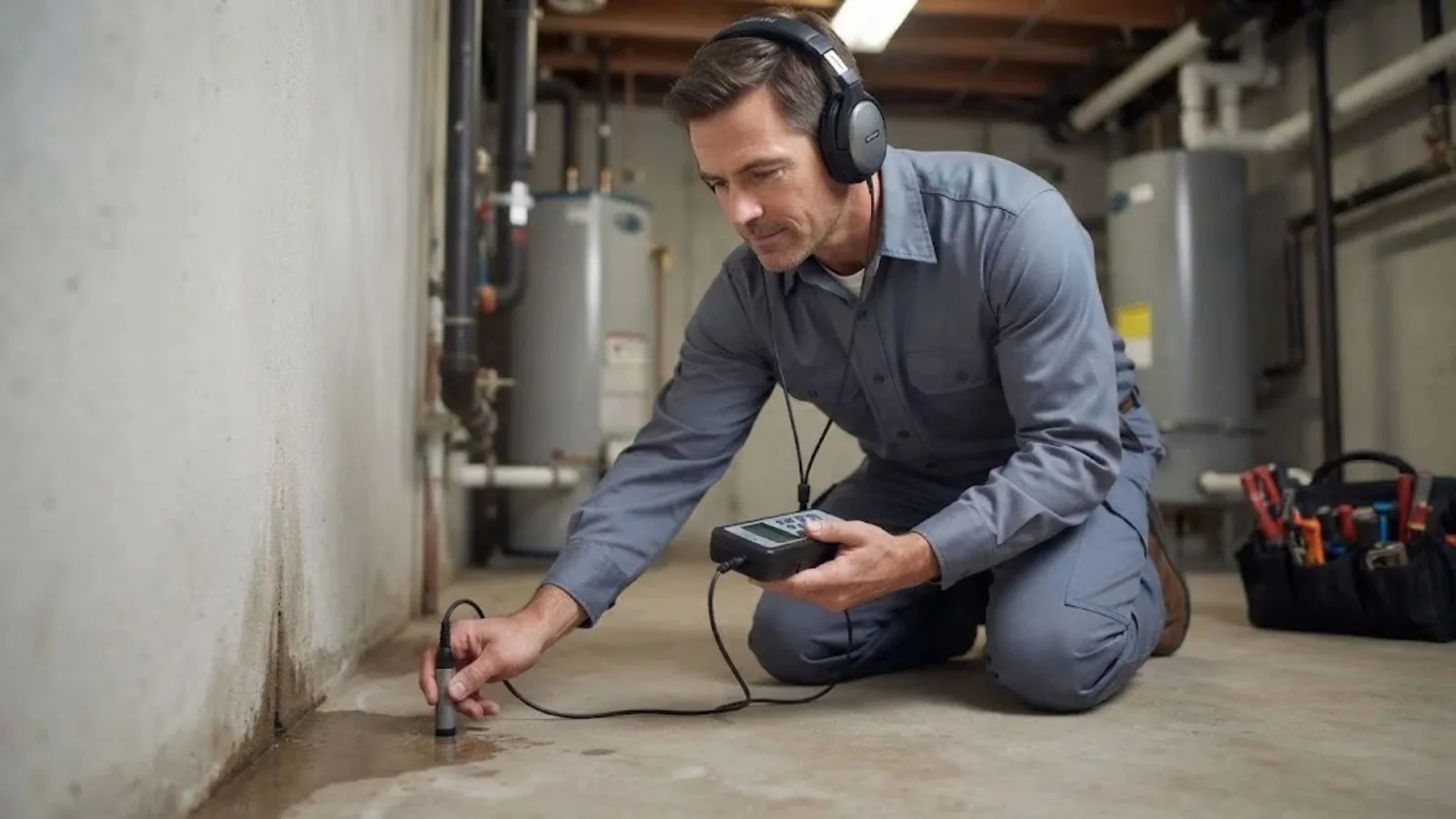
The aim is to locate the leak to within a small area before anyone opens a wall or breaks a slab. A plumber starts with questions and a pressure check, then adds tools until the source is clear. Each method suits a different kind of leak.
| Method | What it does | Suits |
|---|---|---|
| Pressure test | Holds the line under pressure and watches for a drop | Confirming a leak exists on a supply line |
| Acoustic listening | Picks up the sound of water escaping a pipe | Pinpointing leaks under slabs and in yards |
| Thermal imaging | Shows temperature differences behind surfaces | Hot water leaks, wet ceilings, radiant floors |
| Moisture meter | Reads dampness in drywall, wood and concrete | Mapping how far water has spread |
| Camera inspection | Looks inside drain and sewer pipes | Suspected drain line leaks |
No single tool solves every case, so call (630) 822-9290 to talk through your symptoms. A good plumber confirms the finding with a second method before recommending a repair. That extra step protects you from paying to open the wrong wall.
Slab leaks: water under the concrete floor
A slab leak happens when a supply line running through or beneath a concrete floor starts to leak. Warning signs include a warm spot on the floor, the sound of running water at night and a bill that climbs without explanation. Some homeowners also see damp carpet along a wall.
Repair choices depend on where the pipe sits and how many leaks it has. A plumber can sometimes reroute the line through the walls or attic and abandon the buried section. In other cases a spot repair under the slab makes sense. If the same line keeps failing, repiping the house may cost less over time than repeated slab openings.
Water service line leaks between the street and your house
The water service line runs from the Village main to your home, and it is buried. A leak there can waste water for months before it surfaces. Look for a soft or unusually green patch in the yard, a wet basement wall where the pipe enters, or low pressure at every tap.
Hoffman Estates reports no lead service lines, so a leaking line is a repair question, not a health question. Fixing it usually means digging, and the work needs a permit and a utility locate. Our page on water service line repair explains how that process works.
Leaks inside walls, ceilings and crawlspaces
Water travels. A drip at a ceiling stain may start many feet away, running along a joist before it finds a place to fall. That is why plumbers trace a leak back to its source instead of patching the stain.
Leaks above a finished basement ceiling or behind a bathroom wall are common callouts. Under-house and crawlspace leaks are quieter, because nobody sees them until the smell or the bill gives them away. Moisture mapping shows how wide the damage is, and it helps decide whether a section of drywall can dry in place or has to come out. Mold can start in a wet wall within days, so do not wait if the damp spot is growing.
Buried, irrigation and pool leaks
A leak in a buried line outside the house is harder to see and often more expensive to ignore. Wet patches that never dry, a sinking spot in the lawn or a sprinkler zone with weak spray all point to a break underground. Acoustic equipment can locate it so the dig stays small.
Irrigation leaks are usually simple to fix once found, but they can quietly inflate a summer water bill. The Village limits sprinkling between 11 a.m. and 5 p.m. from May 15 to October 1, so check your timer settings. Pool and spa leaks follow a similar process: isolate the plumbing, pressure test it and listen. Leaks at the yard meter box are a smaller group, and they often trace to a valve or fitting that has worn out.
Commercial leak detection
Offices, retail units and apartment buildings have longer pipe runs and more places for water to hide. A leak in a parking lot or a utility room can run unnoticed because no one owns the problem day to day. Share the building layout and any recent plumbing work when you call.
For shutoffs, after-hours repairs and larger systems, see our commercial plumbing page.
What affects the cost of leak detection
What changes the price
The plumber explains the cost of the search and the likely repair before any work starts. You hear the price by phone first, so there are no surprises when the plumber arrives. Call (630) 822-9290 to describe the leak and get that number.
Permits and local rules that can apply
Most small repairs do not need much paperwork, but larger jobs do. The Village lists a sewer and water service repair permit at $75, and its fee schedule shows a plumbing permit of $75 plus $10 per fixture. Emergency repairs can begin right away, and the permit is submitted within 24 hours after work begins.
Plumbing in Hoffman Estates follows the Illinois Plumbing Code, 77 Ill. Adm. Code 890, which the Village has adopted. A licensed plumber handles that paperwork as part of the job.
According to the Village's Water Service handout, a replaced service line under 3 inches is Type K copper and the trench is inspected before it is covered. If detection traces your leak to the buried line, that is the standard the repair is held to.
Why Hoffman Estates winters make leaks worse
Hoffman Estates draws Lake Michigan water through the Northwest Suburban Municipal Joint Action Water Agency, but the cold is a local problem. Village code sets the frost line at 42 inches, so a buried line that is too shallow can freeze, crack and leak. NWS data for O'Hare shows a January average low of 18.8 F, which is cold enough to stress exposed pipes.
In practice, many winter leaks start where a line crosses an unheated wall, garage or crawlspace. Keep the thermostat at 50 F or higher when you travel, as the Village recommends. If a pipe does leak after a cold snap, burst pipe repair may be the next call.
Leak detection questions
Yes. The line is open 24/7, and a licensed plumber can start with your description and a meter check. Same-day visits are often possible, depending on volume.
Shut off all water use and watch the meter for an hour. If the reading changes, you have a leak. If it holds still, check toilets, irrigation and recent usage.
Close the main shutoff valve, stay clear of wet outlets, and photograph the damage. Move belongings away from the wet area so they do not soak up water.
Often yes. Thermal imaging, moisture readings and acoustic listening narrow the search first. An opening is made only when the location is confirmed.
It can be. A slab leak wastes water around the clock and can weaken the ground under a floor, so do not leave it for weeks. Shutting off the main buys you time.
That depends on where the leak is. Call Village Public Works to ask about the street side, and call us for the part that serves your home.
The Village reports that it completed an inventory and found no lead service lines. Water testing for lead is available through Public Works.
Finding a leak does not. Repairs that involve a service line or new fixtures can, and your plumber handles that paperwork.